
01
Inspect
Walk-around with you. Identify the swirls, etch marks, and contaminants worth correcting before we touch a pad.
How we work
Every paint job is a different problem. The four steps below are the same; the time and product depth changes per car.
01
Walk-around with you. Identify the swirls, etch marks, and contaminants worth correcting before we touch a pad.
02
Iron remover, clay decon, surface prep. Paint should feel like glass before we polish — not before.
03
Machine polish in the right number of stages for the paint hardness. No one-size-fits-all menu.
04
Ceramic coating or sealant layered on the corrected paint. The finish that locks in the work.
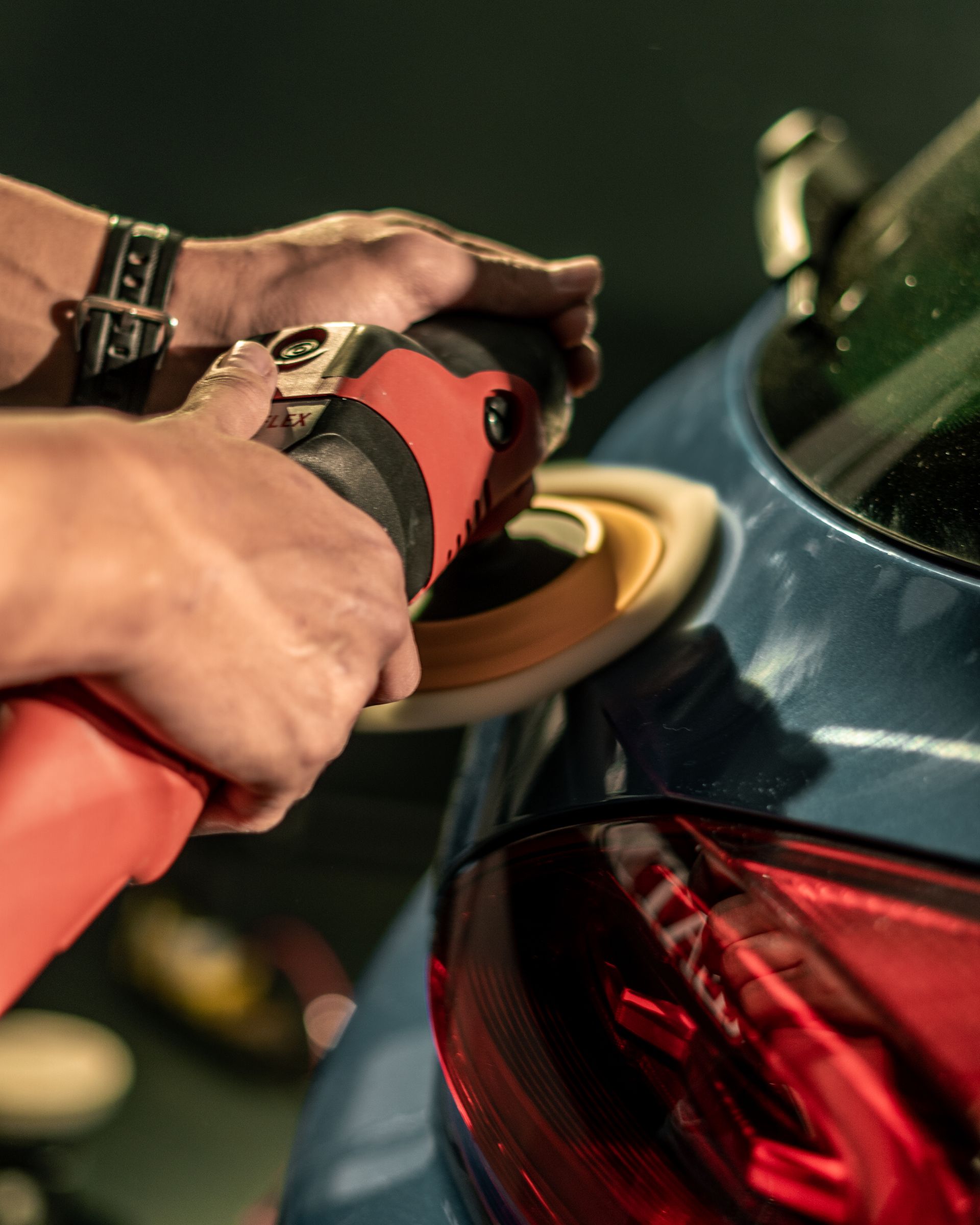
Why machine polish
A buffer cuts swirls and oxidation that no hand polish can reach. We dial pressure and stage by paint hardness — softer Japanese clear coats want a different program than harder German paint. That tuning is what separates a real correction from a one-pass polish.